
What Is an Online Crypto Casino
An online crypto casino is basically a gambling site that lets you deposit, wager, and withdraw using cryptocurrency instead of (or alongside) regular money. That's the simple version.
But here's where it gets messy as not all "crypto casinos" are actually the same thing.
Crypto-Only Casinos vs Hybrid Sites
Crypto-only casinos don't touch fiat at all. You can't deposit dollars, euros, or any traditional currency. Everything runs on Bitcoin, USDT, Ethereum, or Solana. Your account balance shows in crypto, bets are placed in crypto, and you withdraw crypto.
Hybrid casinos accept both. You can deposit with a credit card or bank transfer AND use crypto. Sometimes they convert your crypto to USD internally for betting. Sometimes they let you keep it as crypto. It varies.
The hybrid ones are usually traditional online casinos that added crypto as a payment option. The crypto-only sites were often built around crypto from day one.
What Actually Makes a Casino "Crypto Native"
Real crypto-native casinos:
- Your balance stays in crypto (not converted to USD in the background)
- Withdrawals go straight to your wallet, no third-party processors
- Usually have "provably fair" games where you can verify results on the blockchain using seed
- Built their whole backend around cryptocurrency rails
- Often anonymous or low-KYC (though this is changing)
Not actually crypto-native:
- Accept crypto but immediately convert it to fiat
- Still use the same old slots from the same old providers
- Withdrawals might still take 3-5 days or near instant depending on jurisdiction
- Just using crypto as a payment gateway to avoid banking headaches
The second type isn't necessarily bad, but it's not really a "crypto casino" in spirit. It's a traditional casino with a crypto on-ramp.
Common Marketing Lies vs Reality
100% anonymous means maybe for small amounts. But if you win big or trigger any flags, you're probably getting asked for ID. The truly anonymous era is mostly over.
Instant withdrawals means sometimes yes, often no. Depends on the coin, the casino's liquidity, whether you're on a bonus, and whether you've won too much too fast. We'll get into this later, but "instant" is relative.
Provably fair just means you can verify the game wasn't rigged against you on that specific spin. It doesn't change the house edge. You're still playing a -EV game. Provably fair is about trust, not profit.
Almost none of them are fully Decentralized. There's usually a company running the show, holding your funds, and making decisions. True decentralized casinos exist but they're rare and clunky.
A crypto casino is just an online casino that handles cryptocurrency. The quality, speed, and trustworthiness vary wildly. Don't let the "crypto" label fool you into thinking it's automatically better or safer than traditional options.
Legal situation for USA Players
Most crypto casinos you can access as a USA player exist in a legal gray zone. Understanding this doesn't mean you shouldn't use them, but pretending the gray zone doesn't exist is just naive.
Most Crypto Casino Sites Operate Offshore
Simple answer is US gambling laws are a mess.
Online gambling is heavily restricted at the federal level and regulated state-by-state. Most states don't allow online casinos at all (sports betting is different). The ones that do e.g. New Jersey, Pennsylvania, Michigan, etc. have strict licensing requirements that cost millions and limit you to operating only in that state.
So crypto casinos said "screw it" and set up shop in places like Curacao, Costa Rica, or Malta. They operate under those jurisdictions' laws, not US laws. This lets them accept players from anywhere without dealing with 50 different state regulators.
Is this legal? It's complicated. The casinos aren't breaking the law in their country. Whether you're breaking the law depends on your state, and enforcement is... inconsistent at best.
"Accepts USA Players" vs "Licensed in the USA"
These are completely different things and marketing makes them blur together on purpose.
"Accepts USA players" means they won't block you if you sign up from a US IP address. That's it. It doesn't mean they're legal in the US. It doesn't mean they're licensed here. It just means they'll take your money.
"Licensed in the USA" means they went through the actual regulatory process in a US state and operate legally there. This is almost nonexistent in the crypto casino world. We're talking single digits, if that.
Most crypto casinos have a Curacao license or similar offshore license. These licenses have value as they require some level of compliance and oversight, but they're not US licenses. Don't confuse the two.
Risks for Players
Risks that are mostly overblown:
- Getting arrested for playing online - Has this happened? Technically yes, but it's incredibly rare and usually involves people running the sites, not players. The feds have bigger fish to fry.
- Your bank caring about crypto casino deposits - They don't see "crypto casino." They see you buying crypto. What you do with it after isn't their problem.
Risks that are real:
- The casino disappearing with your funds - This happens. Offshore means limited recourse.
- Withdrawal problems when you win big - Some places pay small wins quickly and drag their feet on big ones.
- Account closures with funds locked - Especially if they decide you broke terms you didn't know existed.
- Tax issues if you don't report winnings - The IRS doesn't care that you used Bitcoin. Gambling winnings are taxable.
The actual legal risk for players varies by state. In some states, online gambling is explicitly illegal (Washington is strict). In others, it's a gray area where the law targets operators, not players. In a few, it's legal if the casino is licensed in that state (which crypto casinos aren't).
Will you get prosecuted? Probably not. Is it technically illegal in many states? Yeah, probably.
VPN-Only Casinos Are a Red Flag
Some casinos straight-up tell you to use a VPN if you're in a restricted region. This is a massive red flag.
If they're asking you to hide your location, they're admitting they shouldn't be serving you. And when withdrawal time comes, they can use that against you.
We've seen this play out a hundred times: Player uses VPN to sign up from the US. Player wins. Casino suddenly cares about KYC and location verification. Player submits real documents showing the US address. Casino says "sorry, you violated ToS by using a VPN" and keeps the money.
It's a trap. They encouraged the behavior they later punish you for.
Casinos that genuinely accept US players don't make you hide. VPN requirements = they want plausible deniability while still taking your deposits.
How to Minimize Risk
People who've been doing this for years don't pretend there's no risk. They manage it.
- Stick to casinos with actual track records (2+ years, real withdrawal reports)
- Never deposit more than you’'re willing to lose completely (not just to the house edge, but to the site vanishing)
- Withdraw regularly instead of building huge balances
- Read terms before claiming bonuses (bonus abuse accusations kill more accounts than anything else)
- Keep records of everything for taxes
- Use casinos that don't require VPNs
- Accept that this is offshore gambling and act accordingly
Don’t:
- Assume crypto is untraceable
- Trust marketing about licensing without checking
- Build up $10k+ balances and then try to cash out all at once
- Ignore withdrawal complaints from other players
- Play on brand-new sites with no history
Nobody can tell you whether using offshore crypto casinos is worth the legal risk. That's your call based on your state, your risk tolerance, and your situation.
Offshore gambling is in a legal gray area. Your best protection is the size of the casino, hence we use it in our ranking methodology.
Crypto vs Traditional Online Casinos for USA players
If you've ever tried using a traditional online casino as a US player, you know the banking situation is a nightmare. Crypto casinos aren't perfect, but they solve some very specific problems that make them attractive despite the risks.
Banking Issues with Fiat Casinos
Traditional online casinos run into a wall with US banking, and it affects everything.
The deposit problem is most US banks and credit card companies don't want anything to do with online gambling. Even in legal states, your card gets declined or the transaction gets flagged. You end up using sketchy third-party payment processors with names you've never heard of, entering your card info on sites that look like they were built in 2003.
Wire transfers work but take forever and often have minimum deposits that are way higher than most people want to risk on an offshore casino. E-wallets like Skrill or Neteller have mostly pulled out of the US market or don't work with gambling sites.
The withdrawal problem is even worse. Getting money out of a traditional online casino as a US player is painful. Wire transfers take 5-10 business days if they work at all. Checks by mail (yes, really) can take weeks and sometimes never show up. Some casinos use Bitcoin for withdrawals but fiat for deposits, which tells you everything about how hard it is to send dollars back to US players.
Chargebacks, Freezes, and AML Flags
Chargebacks cut both ways as with credit cards, you can dispute charges, which sounds great. But casinos know this, so they're paranoid. Win too much? They might hold your withdrawal while "investigating" whether you're going to chargeback your deposits. Some players have had accounts frozen for weeks over this.
And if you do chargeback? You're banned from that casino and probably every casino they're affiliated with. It's not the easy way out people think it is.
AML (Anti-Money Laundering) flags as traditional casinos have to worry about banks flagging transactions. Deposit $500, win $5,000, withdraw it? Your bank might freeze the incoming transaction because "where did this money come from?" You'll spend hours on the phone explaining it's gambling winnings, providing documentation, etc.
We've seen people have accounts frozen for getting multiple deposits from offshore gambling processors. Banks see it as high-risk activity.
Traditional online casinos ask for everything. Driver's license, proof of address, bank statements, selfies holding your ID, source of funds documentation. Not just at signup as they can request more at any withdrawal. It's invasive and time-consuming.
Crypto Casinos Usually Process Withdrawals Faster
This is the big selling point, and it's real (though not always).
No bank middlemen as with crypto, you're sending coins from your wallet to theirs, or vice versa. No payment processor. No bank scrutinizing the transaction. No ACH holds. No wire transfer delays. When a crypto casino approves your withdrawal, it can hit your wallet in minutes or hours instead of days.
Lower overhead on transactions as banks charge casinos hefty fees for processing payments, especially international ones. Crypto transactions cost less (depending on the coin), so casinos have less reason to batch withdrawals or delay them to save on fees.
Liquidity is simpler as a traditional casino needs relationships with banks and payment processors willing to work with them. Crypto casinos just need enough coins in their hot wallet. If they have it, they can send it. No approval chains.
That said, "usually faster" doesn't always mean instant. Crypto casinos still have their own internal processes, bonus wagering requirements, and verification checks. But the potential for speed is there in a way it just isn't with fiat.
Crypto Casinos Ask Fewer Questions
Less regulatory pressure as crypto casinos operating offshore don't face the same KYC (Know Your Customer) requirements as casinos trying to work within traditional financial systems. They can ask for documents, and many do eventually, but they're not required to collect everything upfront.
The nature of crypto let's you deposit from any wallet. They don't need your bank account info, your name on a credit card, or proof of where you live. You send coins, they credit your account. Simple.
Marketing advantage of "No KYC!" is a selling point. Traditional casinos can't compete on privacy because they're locked into systems that demand identification at every step.
Many crypto casinos are moving toward more KYC anyway, especially for larger withdrawals. The "anonymous gambling" era is fading. Still, they generally ask less than fiat casinos, at least initially.
Trade-offs: Consumer Protection vs Freedom
This is the part people don't like to think about, but it's crucial.
What you gain with crypto casinos:
- Faster transactions (potentially)
- Less invasive verification (usually)
- Access when traditional banking won't work
- No chargeback paranoia from the casino
- No bank questioning your gambling
What you lose:
- Chargebacks as recourse if something goes wrong
- Regulatory oversight that might help with disputes
- Bank fraud protection
- Clear legal standing if the casino screws you
With a traditional casino using fiat, if they refuse to pay a legitimate withdrawal, you might have recourse through your bank, your credit card company, or a gambling commission. It's not guaranteed, but there are mechanisms.
With a crypto casino? You're sending irreversible transactions to an offshore entity. If they decide not to pay you, your options are limited to public complaints and hoping they care about their reputation. There's no "call your credit card company" option.
Crypto casinos give you more freedom and less friction, but you're trading consumer protections for that freedom. Some people value speed and privacy enough to accept the risk. Others don't.
If you're someone who wants traditional consumer protections, regulated entities, and the ability to dispute transactions, crypto casinos are probably not for you. If you're frustrated with banking restrictions and willing to accept more personal responsibility for vetting where you play, crypto might make sense.
Supported Cryptocurrencies
The coin you choose affects your fees, how fast you get paid, and sometimes even whether the casino will process your withdrawal smoothly..
Bitcoin (BTC) – Reliability and Network Fees
Bitcoin is the OG and still the most widely accepted crypto at online casinos. Every crypto casino takes BTC. It's the safe choice.
Bitcoin is liquid. Casinos can convert it to fiat easily if needed, or hold it, or use it to pay other players. There's deep market liquidity everywhere. If a casino is going to accept one crypto, it's Bitcoin.
The problem is network fees as Bitcoin transaction fees are unpredictable. Sometimes you're paying $2 to send a transaction. During network congestion, you might pay $20-30. For a $100 withdrawal, that's a huge percentage.
And it's not always clear who's paying the fee. Some casinos eat the network fee. Others deduct it from your withdrawal. Always check.
Confirmation times as Bitcoin needs multiple confirmations before casinos credit your deposit (usually 2-3 confirmations, which is 20-30 minutes). Withdrawals are similar. It's not slow, but it's not instant either.
Best for larger withdrawals where the fee is a smaller percentage. If you're cashing out $1,000+, Bitcoin fees don't sting as much. Also best if you're holding long-term and don't want stablecoins.
USDT – Stability, Fastest Accounting
USDT (Tether) is a stablecoin pegged to the US dollar. 1 USDT = $1 (in theory). This is what most casino players use.
No price volatility. Deposit $500 in USDT, it's worth $500 when you bet and $500 when you withdraw (assuming you didn't lose it gambling). You're not worrying about Bitcoin dropping 10% while your withdrawal is pending.
Casinos like it too because accounting is simple. No conversion calculations. Your balance shows as $500 USDT and everyone knows exactly what that means.
Network matters as USDT exists on multiple networks: Ethereum (ERC-20), Tron (TRC-20), and others. Always check which network the casino uses. Send USDT on the wrong network and your money is gone as the casino can't retrieve it.
TRC-20 USDT (Tron network) is the most common for casinos but fees in 2026 became like $5-10 which is too high. ERC-20 USDT uses Ethereum's network which used to be expensive but after recent network update simple stablecoins transfers to a casino are just $0.05-0.30 depending on gas prices.
All networks where USDT lives are fast. Confirmations take a few minutes. Withdrawals can hit your wallet in 10-15 minutes if the casino approves them quickly.
If you want to deposit, gamble, and withdraw without worrying about price swings, USDT is the move. Just double-check the network.
ETH
Ethereum is accepted at most crypto casinos, but it's not always the best choice for players.
ETH is liquid, widely supported, and fast (faster confirmations than Bitcoin). If you already hold ETH or use it for DeFi, it's convenient.
The downside is price swings. The price can fluctuate wildly adding another gambling on top.
In the past fees used to be high, but in 2026 even ETH L1 is cheap, so fees are not a concern anymore.
Solana
Solana is the new favorite, and for good reason.
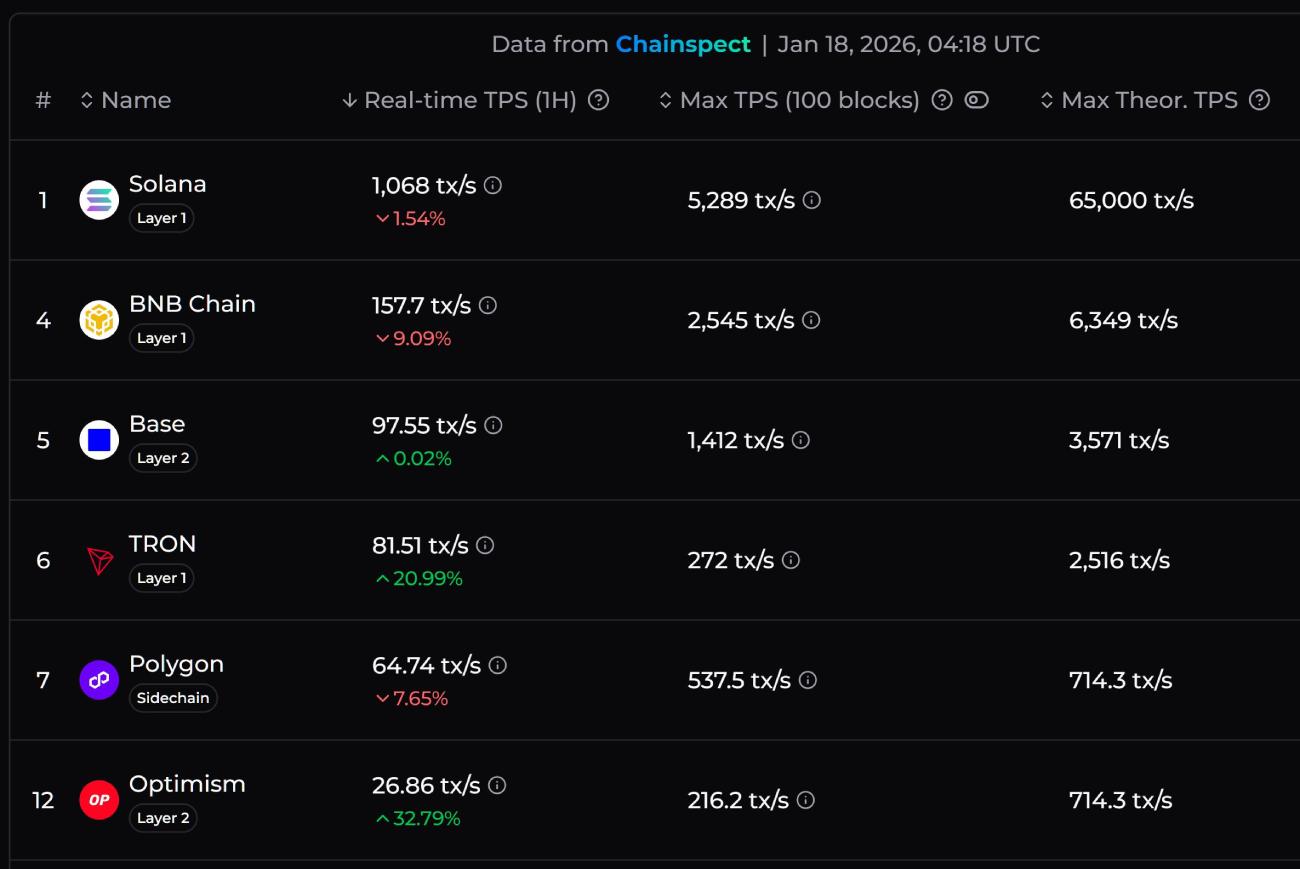
Fees are dirt cheap (fractions of a cent) and transactions are near-instant. Confirmations happen in seconds, not minutes. For casino players, this is huge.
A lot of newer crypto casinos are building on Solana or adding it specifically because the user experience is so much better than Ethereum.
Speed advantage is where Solana shines. Deposits confirm almost instantly. Withdrawals can hit your wallet in under a minute if the casino processes them right away. It genuinely feels instant in a way Bitcoin and ETH don't.
It’s best for players who prioritize speed and low fees over maximum casino options. If your casino supports Solana, use it. You'll save on fees and get paid faster.
XRP
XRP is fast, cheap, and... not as widely supported as you'd think.
Transaction fees are negligible (less than a cent). Confirmations are fast (3-5 seconds). If you're moving money frequently, XRP is efficient.
Fewer casinos accept it compared to BTC, USDT, or ETH. It's niche. Also, XRP has had regulatory uncertainty (the SEC lawsuit drama), which makes some casinos hesitant.
If the casino supports it and you already hold XRP. It's great for what it does, but don't go out of your way to buy XRP just for casino deposits when USDT or Solana does the same job with wider acceptance.
Which Coins Are Best for Instant Withdrawals
Payout speed:
- Solana – Genuinely fast. Network confirmations in seconds.
- USDT (TRC-20) – Fast and casinos process it quickly because accounting is simple.
- XRP – Fast network, but fewer casinos support it.
- Bitcoin – Reliable but not fast. 20-30 minutes for confirmations.
- ETH – Faster than Bitcoin, but gas fees slow you down mentally even if the network is quick.
The real bottleneck is usually the casino's internal approval process, not the blockchain. But using a fast coin at least removes one delay.
Always double-check which network the casino uses before you send anything.
Crypto Casino Games
Crypto casinos offer the same games as traditional online casinos, plus some crypto-native options you won't find elsewhere. But not all games are created equal when it comes to speed, fairness, or how they treat your money.
Slots
Same slots you'd find at any online casino. Providers like Pragmatic Play, Hacksaw Gaming, NetEnt, etc., license their games to crypto casinos just like they do to fiat casinos.
The slots work the same way. RNG (random number generator) determines outcomes. You spin, you win or lose, repeat. The difference is you're betting in crypto and (hopefully) withdrawing in crypto.
Most crypto casinos have hundreds or thousands of slots. They're the bread and butter of the industry.
Live dealer games
Real dealers, real cards, real roulette wheels, streamed via video. Blackjack, roulette, baccarat, poker variants, game shows like Crazy Time.
The same providers dominate: Evolution Gaming, Pragmatic Play Live, Ezugi. The games are identical to what you'd play at a fiat casino. You're just betting with crypto.
Live dealer games usually have higher minimum bets than slots, and they're slower (you're waiting for other players, dealers shuffling, etc.). But some people prefer the "realness" of it.
Originals (crash, dice, plinko, mines)
This is where crypto casinos differentiate themselves. "Originals" are simple, fast games built specifically for crypto casinos. They're not from third-party providers—the casino develops them in-house or licenses generic versions.
Crash
Watch a multiplier climb from 1x upward. Cash out before it crashes. The longer you wait, the higher the multiplier, but if you don't cash out before it crashes, you lose.
Dice
Pick a number, roll above or below it. Adjust the probability and payout accordingly. Dead simple.
Plinko
Drop a ball down a peg board. It bounces randomly and lands in slots with different multipliers.
Mines
Click tiles on a grid. Some are safe (you win and can continue), some are mines (you lose everything). Cash out whenever you want.
These games are stupid simple, low on graphics, and designed for fast, repetitive play. Think mobile game mechanics applied to gambling.
Originals Have Lower Overhead and Faster Payouts
Slots and live dealer games cost casinos money. They pay licensing fees to game providers (Pragmatic, Evolution, etc.). Those providers take a cut of the casino's revenue from those games. It's not a small cut either.
Originals are different. The casino owns them. No revenue sharing. No licensing fees. The only cost is development and hosting, which is minimal for simple games like dice or plinko.
This means casinos make more profit on originals, which also means they can sometimes be more flexible with payouts. Not always, but the economics are different.
Faster payouts as originals settle instantly. There's no waiting for a slot provider's server to confirm results or for a live dealer to complete a hand. You play, you win or lose, it's done. This makes them better for quick sessions and fast withdrawals.
Some players swear originals pay out faster (as in, withdrawal requests get approved quicker) because casinos prefer you playing their in-house games. We can't prove this, but we've heard it enough to mention it.
RTP Transparency and Provably Fair Systems
RTP (Return to Player is the theoretical percentage the game returns to players over time. A 96% RTP means the game is designed to pay back $96 for every $100 wagered (in the long run).
Traditional slots show RTP in the game info. Live dealer games have inherent RTPs based on rules (blackjack with good rules might be 99%+, roulette is 97.3% for European, worse for American).
Crypto casinos are supposed to display RTP, and most do, but it's worth checking. Some sketchy casinos hide this info.
Provably fair games (usually originals like dice, crash, mines) use cryptographic techniques to prove the outcome wasn't manipulated after you bet. Before the round, the casino commits to a result using a hash. After the round, you can verify the result matches the hash. The casino literally can't change the outcome mid-game without you knowing.
Does this mean you'll win? No. The house edge still exists. But it means the casino isn't cheating on that specific bet.
Most players never actually verify anything. They just trust that "provably fair" means fair. And for licensed third-party slots, there's no provably fair system and you're trusting the RNG.
Provably fair is nice for originals. For slots and live dealer games, you're still trusting centralized providers.
No Deposit Bonuses
The best crypto casino no deposit bonus is the one that actually exists and doesn't come with impossible terms.
Casinos aren't charities. Giving away free money to everyone who signs up is expensive, especially when people create multiple accounts to abuse it.
The casinos that offer them are usually new and trying to build a player base, or they're making the terms so restrictive that almost nobody actually withdraws.
Typical caps and traps are wagering requirements that exceed x20. 50x, 60x, even 100x the bonus amount. Get a $10 no deposit bonus with 60x wagering? You need to bet $600 before you can withdraw anything. Good luck.
Max withdrawal caps are low. Even if you somehow turn $10 into $200, you're capped at withdrawing $50 or $100. The rest vanishes.
Game restrictions apply. Usually slots only, and often specific slots with lower RTPs.
Verification required before withdrawal. You might not need KYC to claim the bonus, but you'll need it to cash out. If you can't or won't verify, the bonus is worthless.
Max bet limits. Bet more than $1 or $5 per spin and your bonus is void. This makes clearing wagering even slower and more tedious.
Real no deposit bonuses:
- Come from established casinos with good reputations
- Have reasonable wagering (30x-40x max)
- Allow withdrawals of at least $100-200
- Have clear, simple terms
Bait bonuses:
- From sketchy casinos with no track record
- Wagering requirements over 50x
- Max withdrawal under $50
- Terms buried in fine print or unclear
- Require a deposit "to verify payment method" before withdrawing (negating the "no deposit" part)
Most no deposit bonuses aren't worth the time. You're better off depositing $20 of your own money and playing without restrictions than grinding a $10 no deposit bonus for hours just to hit a withdrawal cap.
But if you see a no deposit bonus from a reputable casino with reasonable terms, sure, try it. Just don't expect to make money. Treat it as a free trial.
Crypto Deposit Bonuses
This is the main type of bonus at crypto casinos. Deposit $100, get a 100% match, now you have $200 to play with. Sounds great, right?
At traditional casinos, wagering requirements exist but enforcement is inconsistent. Players sometimes get away with stuff.
At crypto casinos they track everything. Every bet is logged. They know exactly how much you've wagered, which games you played, what your bet sizes were. The blockchain and automated systems make enforcement airtight.
If you violate bonus terms even accidentally your account gets flagged instantly. No appeals, no understanding. Just "bonus abuse, account closed, funds confiscated."
Deposit $100, get a $100 bonus. You now have $200 in your account, but the $100 bonus (and sometimes your deposit too) is locked until you meet wagering requirements.
Typical requirements: 30x-40x the bonus amount, sometimes 30x the deposit + bonus.
Example: $100 deposit + $100 bonus with 35x wagering on the bonus = $3,500 in bets required.
Until you complete wagering, you can't withdraw. If you try to withdraw early, you forfeit the bonus and any winnings from it (sometimes your entire balance depending on how they structure it).
Not all bets count equally. Slots usually count 100%. Table games might count 10% or be excluded. Check the terms.
If you bet $100 on blackjack that contributes 10%, only $10 counts toward wagering. You'd need to bet $1,000 on blackjack to get the same credit as $100 on slots.
Most bonuses cap your bet size at $5 or $10 per spin/hand. Bet more and your bonus is void even if you lose.
This is a trap for players who don't read terms. You're on a hot streak, you bump your bet to $20, you win big, you try to withdraw... "Bonus abuse, max bet violated, winnings confiscated."
Casinos lose money on bonuses. They're customer acquisition costs. They expect most players to lose while clearing wagering.
If you find a way to profit from bonuses consistently you will be flagged as unprofitable. They'll limit your bonuses, then ban you.
Actual bonus abuse (multiple accounts, betting patterns that reduce variance, exploiting game bugs) gets you banned and blacklisted across affiliate networks.
We've seen people lose five-figure balances because they accidentally violated a bonus term they didn't know existed. The casino doesn't care that it was an accident.
Should you take bonuses?
Depends on your play style. Take bonuses if:
- You were going to deposit and play anyway
- You understand the terms and can follow them
- You're playing slots (where bonuses work best)
- The wagering requirements are reasonable (30x or less)
Skip bonuses if:
- You want maximum withdrawal flexibility
- You play table games primarily
- You can't be bothered to read 5 pages of terms
- You might want to withdraw quickly
A lot of experienced players just say no to bonuses. They deposit, play, and withdraw when they want. No restrictions. No risk of account closure for bonus abuse.
Bonuses are a trap for greedy players who see "free money" and ignore the strings attached. If you're disciplined and understand the terms, they're fine. If you're not, you're better off playing with your own money only.
Bottom line is bonuses are marketing, not generosity. They're designed to benefit the casino, not you. If you use them, do it with eyes open and a willingness to walk away if the terms suck.
Crypto casinos aren't perfect, and they're definitely not for everyone. They operate in a legal gray area, you're giving up consumer protections for speed and privacy, and the "Wild West" nature of it all means you need to do your homework before depositing anywhere.
But for USA players who are tired of banking headaches, want faster withdrawals, and are willing to accept some risk in exchange for fewer restrictions, they solve real problems and with a trusted operator that is serving millions of players for years, they have their place.