
An online slot is software that simulates a slot machine. That's it. There's no physical reels, no mechanical parts, just code running on a server somewhere that determines what you see on your screen.
Every time you hit spin, the game runs a random number generator (RNG). The RNG is an algorithm that spits out a random number, which then gets mapped to a specific combination of symbols on the reels. This happens in milliseconds, before the reels even start their visual spin animation.
The animation is just for show. The outcome was decided the instant you clicked. The spinning reels are basically a loading screen that looks like a slot machine.
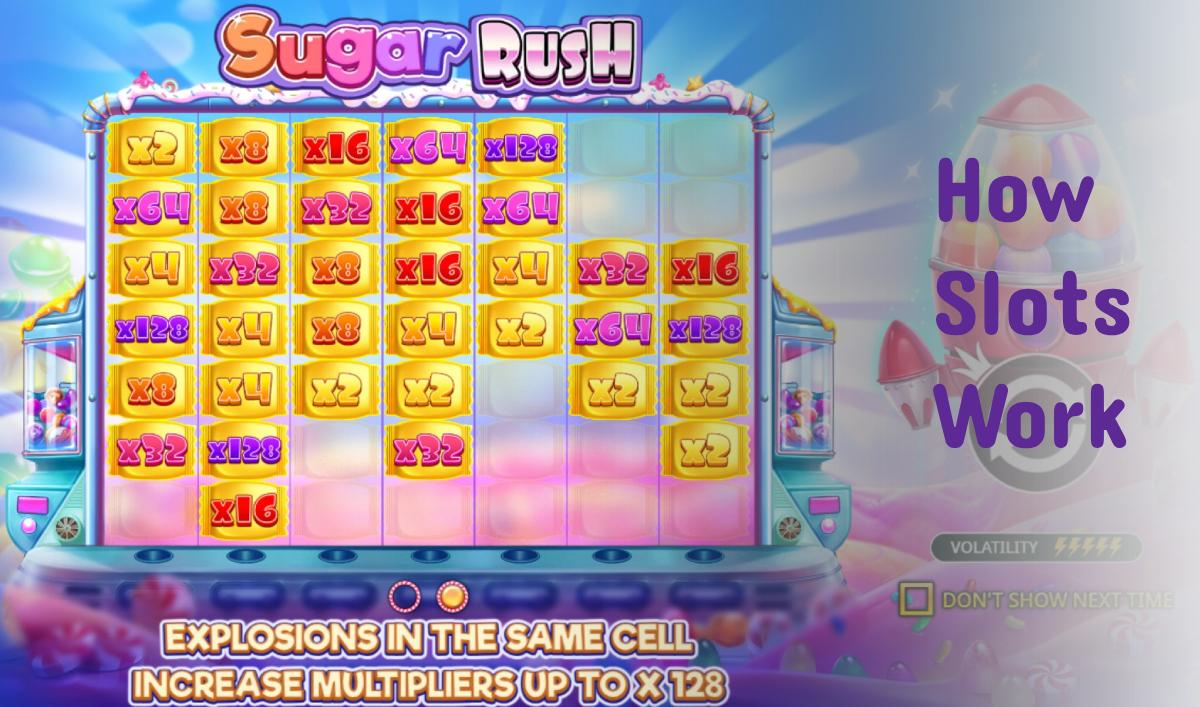
RNG Explained
Think of an RNG like rolling dice, except the dice has millions of sides and the game rolls it thousands of times per second. When you press spin, the game takes whatever number the RNG is at that exact moment and uses it to determine your result.
The RNG doesn't know or care about:
- What happened on your last spin
- How much you've won or lost
- How long you've been playing
- Whether you just deposited money
It's not programmed to "pay out" after a certain number of spins. It doesn't have a memory. It's just random math happening continuously.
Every Spin Is Independent
If you lose 20 spins in a row, the 21st spin has the exact same odds as the first one. The slot doesn't "owe" you anything. There's no internal counter tracking how unlucky you've been.
The RNG generates millions of outcomes per second whether you're playing or not. Your timing doesn't matter. Clicking faster or slower changes nothing. The machine isn't getting "hot" or "cold" - that's your brain finding patterns in randomness.
Online vs Land-Based Slots
Brick and mortar slots in casinos also use RNG, but they're physical machines with some mechanical components. Online slots are pure software. This means:
- Online slots can have more complex features and bonus games
- They can offer thousands of paylines or "ways to win" instead of being limited by physical reels
- The RTP (return to player) is usually higher online because operating costs are lower
- Results are determined by certified RNG software that gets audited by third parties
- You can't tell when a slot is "ready to pay" by sound or visual cues, because there are none
Land-based slots are often programmed with long-term payout cycles across an entire casino floor. Online slots from licensed providers are truly random per spin, regulated by gambling authorities.
Before You Play
Understanding that slots are completely random changes how you should approach them. You can't outsmart randomness. You can't develop a "system." You can't time your spins or switch machines at the right moment.
What you can do is understand the math, manage your money, and know that when you play, you're paying for entertainment with random outcomes. Some sessions you'll win. Most sessions you'll lose. That's how the math works when the house edge is built into every spin.
If you're expecting anything other than randomness, you're going to have a bad time and lose money faster than you need to.
How to Play Online Slots for Real Money
Real Money vs Demo Play
Most online slots let you play in demo mode without depositing. Demo mode uses fake credits and works exactly like the real game - same RNG, same features, same odds. The only difference is you can't withdraw demo winnings because they're not real.
Demo mode is useful for learning how a game works without risk. But it can also give you a false sense of how variance feels when actual money is on the line. Losing $500 in fake credits hits different than losing $50 of your own money.
If you're new, try a demo first to understand the game mechanics. Then switch to real money with small bets.
Choosing a Casino and Depositing
You need a licensed online casino. Licensed casinos display their license number in the footer of their website.
Depositing is usually straightforward - credit card, debit card, e-wallets like PayPal or Skrill, sometimes crypto. Most casinos have a minimum deposit around $10-$20.
Start small. Deposit an amount you're comfortable losing completely, because that's the most likely outcome.
Choosing Your Bet Size
Every slot lets you adjust your bet per spin. This is usually shown as "Bet" or "Coin Value" with plus/minus buttons.
Your bet size should match your bankroll. If you deposit $50 and bet $5 per spin, you get 10 spins before you're done. That's not enough to experience the game's variance. A better approach is betting $0.20-$0.50 per spin, giving you 100-250 spins.
More spins = more chances to hit bonus features and see what the game actually does. You'll still probably lose, but you'll get more entertainment time for your money.
Reading the Paytable
Every slot has a paytable, usually accessed by clicking an "i" icon or "info" button. Most players ignore this. Don't.
The paytable shows:
- What each symbol pays
- How bonus features trigger
- What special symbols do (wilds, scatters, multipliers)
- The RTP percentage (return to player)
- Maximum win potential
Five minutes reading the paytable saves you from confusion mid-game. You'll know what you're chasing and what different symbols mean when they land.
Lines, Ways, and Features
Paylines
Traditional slots have set paylines (like 20 or 25 lines). You win when matching symbols land on an active payline from left to right.
Ways to Win
Modern slots often use "243 ways" or "1024 ways" instead of paylines. Any matching symbols in adjacent reels count as a win, regardless of position. This usually means more frequent small wins.
Symbols to know:
- Wild. Substitutes for other symbols to create wins (like a joker in cards).
- Scatter. Usually triggers bonus features, often pays regardless of payline.
- Bonus symbols. Trigger special game features when you land enough of them.
- High-pay vs low-pay: Picture symbols usually pay more than card symbols (A, K, Q, J, 10)
Common features:
- Free Spins. Triggered by landing scatters, gives you spins without reducing your balance.
- Multipliers. Multiply your win by 2x, 3x, or more.
- Bonus Games. Mini-games within the slot, usually triggered by specific symbol combinations.
What Happens When You Press "Spin"
You click spin. The game deducts your bet from your balance immediately. The RNG instantly determines the outcome. Then the reels spin for visual effect and stop on the predetermined result.
If you win, the amount gets added to your balance. If you lose, nothing happens - your bet is already gone.
That's one spin. You can hit spin again or adjust your bet. There's usually an "autoplay" option that repeats spins automatically, but this burns through your bankroll faster if you're not paying attention.
Some slots have a "turbo" or "quick spin" mode that skips animations. This gets you more spins per minute but also means losing faster if variance isn't in your favor.
Before your first real spin check three things:
- Your bet size is set correctly
- You understand what you're trying to hit (read the paytable)
- You're okay with losing this money
If all three are true, you're ready. The game will do what it does. Your job is just to decide when to stop.
Licensed & Branded Slots
When a slot is "licensed," it means it's made by a legitimate game provider - companies like NetEnt, Pragmatic Play, Play'n GO, Microgaming, Big Time Gaming, Evolution (formerly Red Tiger), Push Gaming, Yggdrasil, Relax Gaming, Hacksaw Gaming, Nolimit City, ELK Studios, Thunderkick, Quickspin, and dozens of others.
These providers build slots and license them to casinos. The casino doesn't control the game code or the RNG. They just host it. The provider maintains the game, ensures the RNG is certified, and submits to regular audits from testing labs like eCOGRA, iTech Labs, or GLI.
This is different from a casino building their own slots in-house, which we'll get to.
Branded Slots vs Generic Slots
Branded slots are licensed to use intellectual property from movies, TV shows, bands, celebrities, or video games. Examples: Jurassic Park (Microgaming), Guns N' Roses (NetEnt), Game of Thrones (Microgaming), Narcos (NetEnt), The Dog House (Pragmatic Play - not branded but hugely popular).
Generic slots are original themes created by the provider. Most slots are generic.
The difference is just cosmetic. A branded slot uses recognizable characters, music, and visuals. A generic slot makes up its own theme. The math underneath is identical - RNG works the same way, RTP is set the same way, volatility is programmed the same way.
Branded slots have lower RTP
Branded slots often have lower RTP than generic slots from the same provider. This is because the provider pays licensing fees to use the brand, and that cost gets passed on through reduced RTP.
For example:
- NetEnt's Starburst (generic): 96.09% RTP
- NetEnt's Jurassic Park (branded): 95.45% RTP on some versions
The brand doesn't make the game more generous. It makes it more expensive to operate, which means slightly worse odds for you. You're paying extra for the theme.
That said, some branded slots are great games with solid RTP. Just don't assume a recognizable brand equals better chances.
RTP Differences Between Providers and Games
RTP (return to player) is the percentage of all wagers a slot is programmed to pay back over millions of spins. If a slot has 96% RTP, it's designed to return $96 for every $100 wagered long-term. The casino keeps the other $4 as house edge.
RTP varies significantly:
- High RTP is 97-99% (rare, usually simple slots)
- Standard RTP: 95-96.5% (most slots fall here)
- Low RTP is 92-94% (branded slots, some high-volatility games)
Different providers have different RTP ranges:
- NetEnt and Play'n GO tend to hover around 96%
- Pragmatic Play often sits at 96% but offers operator-adjustable RTP versions
- Nolimit City and Hacksaw Gaming sometimes go lower (94-96%) for extreme volatility games
- Some providers let casinos choose RTP configurations (like 94%, 95%, or 96% versions of the same game)
Always check the paytable for the exact RTP of the game you're playing. Two casinos can offer the same slot with different RTP settings.
Licensed Provider Are Safer Than House-Built Slots
Licensed provider slots go through certification. The RNG gets tested, the RTP gets verified, and the game gets audited to ensure it works as advertised. Providers stake their reputation on this - if they cheat, they lose their licenses and their entire business collapses.
House-built slots (games made by the casino itself) are riskier. Some are fine, especially from established casinos with proper licensing. But some unregulated casinos build their own slots with:
- Unaudited RNG
- Undisclosed RTP
- No third-party testing
- Potential for manipulation
If you're playing at a licensed casino (UK, Malta, Curacao, etc.) and the slot is from a recognized provider, you can trust the RNG is fair. The game might have bad RTP or high volatility, but it's not rigged. The math is what it says it is.
If you're on an unlicensed site playing slots you've never heard of from providers that don't exist outside that casino, you're gambling on whether the game itself is even honest.
Before spinning:
- Look for the provider name (usually in the game's title screen or info section)
- Check the RTP in the paytable
- Verify the casino is licensed (footer of the website)
If you can't find the provider, can't see the RTP, or the casino has no visible license, you're taking an unnecessary risk. There are thousands of legitimate slots from real providers. No reason to play sketchy ones.
RTP, Volatility and Bankroll
RTP is a long-term statistical average, not a guarantee for your session. If a slot has 96% RTP, it means over millions of spins from all players combined, the game will pay back 96% of all money wagered.
The math: You bet $100 total across many spins. Long-term, you should expect to get back around $96. The casino keeps $4. That's the house edge (4% in this case).
But "long-term" means millions of spins. You're not playing millions of spins. You're playing maybe a few hundred or a few thousand in a session. Over that short sample size, anything can happen.
You could turn $100 into $500. You could lose it all in 20 minutes. Both outcomes are normal variance, and neither changes the fact that the RTP is still 96% over the long run.
Volatility: Low vs Medium vs High
Volatility (also called variance) describes how a slot pays out. It has nothing to do with RTP. A 96% RTP slot can be low volatility or high volatility - the RTP stays the same, but the experience is completely different.
Low volatility: Frequent small wins. You'll hit winning spins often, but they're usually close to your bet size or slightly above. Your balance drains slowly. You get a lot of gameplay time. Rarely hit massive wins.
Medium volatility: Balanced. You'll get some small wins, occasional medium wins, and rare big wins. Most slots fall into this category.
High volatility: Rare wins, but when they hit, they can be huge. You'll go through long losing streaks. Your balance disappears fast. But if you hit a bonus or big multiplier, you can win 100x, 1000x, or more your bet. Most sessions end in losses. Some sessions print money.
Feelings Lie
Your brain isn't built to understand variance. If you play a high-volatility slot and lose 50 spins in a row, it feels like the game is broken or rigged. It's not. That's just what high volatility looks like.
If you then hit a bonus and win 200x your bet, you'll feel like the slot "finally paid." It didn't. It was random the whole time. The losing streak and the big win are both normal outcomes for that volatility level.
Low-volatility slots feel "safer" because you win more often, but you're still losing money over time - just slower. High-volatility slots feel worse because you lose faster, but they offer bigger win potential.
Neither is better. They're just different ways to lose money with different entertainment value.
Opposite Experiences on the Same Slot
Two people can play the same slot at the same RTP and have completely different results. One person deposits $50, plays 100 spins, hits a bonus on spin 30, and walks away with $200. Another person deposits $50, plays 100 spins, never triggers a bonus, and loses everything.
Same game. Same RTP. Same odds. Different variance.
This happens because:
- RTP is a long-term average, not a per-session guarantee
- Volatility means outcomes cluster unpredictably
- Bonus features trigger randomly - some players hit them early, some never hit them
When you see someone on Reddit post a screenshot of a massive win, you're seeing one outcome from one session. You're not seeing the 50 other sessions where they lost. And you're definitely not seeing the thousands of players who played that same slot that day and lost everything.
Bankroll Size
Your bankroll determines which volatility level makes sense.
Small bankroll ($20-$50): Play low or medium volatility with small bets ($0.10-$0.25 per spin). You need longevity to even experience what the game does. High-volatility slots will eat this in minutes.
Medium bankroll ($100-$300): Medium volatility works well. You can handle some dry spells and still have enough spins to potentially hit features. You could try high volatility with very small bets, but expect to bust out more often.
Large bankroll ($500+): High volatility becomes playable. You can survive the losing streaks and still have money left when variance eventually swings positive. This doesn't mean you'll win, just that you'll see what the slot is capable of.
The worst mistake is playing high-volatility slots with a small bankroll and big bets. You'll lose fast and never see the game's potential. It's like buying one lottery ticket and being upset you didn't win.
Session Length
Luck is just variance playing out. What actually matters is how many spins you get.
If you have $50 and bet $5 per spin, you get 10 spins (assuming you lose every spin, which is possible). Ten spins isn't enough to trigger most bonus features. You probably won't see what the game even does. You're basically flipping a coin 10 times and hoping for the best.
If you have $50 and bet $0.20 per spin, you get 250 spins. Across 250 spins, you'll likely trigger at least one bonus round on most slots. You might hit a few medium wins. You'll actually experience the variance instead of just instant-busting.
More spins = more exposure to the RTP and volatility doing their thing. You still lose long-term because of house edge, but short-term anything can happen - and you need enough spins for "anything" to have a chance.
Session length is why bankroll management matters. It's not about winning. It's about getting enough spins to make the game entertaining instead of just watching your money vanish in 90 seconds.
How to Win in Online Slots
You don't "win" at online slots in any sustainable way. The house edge guarantees you lose long-term. What people call "winning" is short-term variance temporarily swinging positive.
When you win a session, you didn't outsmart the game. You didn't find a pattern. You didn't hit at the right time. You got lucky. The RNG produced favorable outcomes for your small sample size of spins. That's it.
Next session, variance will probably swing back. Over enough sessions, the house edge grinds you down. Math always wins.
Casino marketing shows people winning life-changing jackpots, hitting max multipliers, and celebrating huge payouts. This is real - those wins happen. But the marketing doesn't show the statistical reality.
What casinos show you:
- Massive jackpot winners
- Streamers hitting insane bonus rounds
- "Player X won $50,000 on Slot Y!"
What actually happens:
- Most players lose their entire deposit
- Most sessions end negative
- Big wins are spread across millions of players and billions of spins
- For every person who wins $10,000, thousands of people lost $100 each to fund it
Casinos advertise the outliers because that's what gets people to play. They're not lying - those wins happened. But they're showing you the 0.01% and ignoring the 99.99%.
Winning Sessions
A realistic winning session isn't hitting a 5000x multiplier and retiring. It's more like:
- You deposit $50
- You bet $0.50 per spin
- After 150 spins, you hit a decent bonus round
- The bonus pays $80
- You're now at $65 total (up $15)
- You play another 50 spins and slowly drift down to $55
- You cash out with a $5 profit
That's a winning session. You came out ahead. It's not exciting, but it's statistically more realistic than hitting huge.
Or sometimes:
- You deposit $100
- You hit a good bonus early and jump to $250
- You keep playing and slowly bleed back down to $180
- You cash out +$80
These are wins. They're just not the wins people post about.
Big Wins Are Rare
Slots are designed so big wins are mathematically possible but statistically unlikely. A 1000x win might have 1 in 50,000 odds. A max win might be 1 in 500,000 or worse.
If one million people are playing slots on any given day, someone is hitting that 1 in 500,000. It's inevitable. But your personal odds of being that person are still 1 in 500,000.
Big wins exist to keep people playing. They're funded by everyone's collective losses. The slot takes in $1,000,000 from losing players and pays out $50,000 to one player. That player won. The other 999 players lost. The casino kept $950,000.
You see the winner. You don't see the 999 losers.
Survivorship Bias
Survivorship bias is when you only see the successes and forget the failures exist.
When someone hits a 2000x win on Gates of Olympus, they post a screenshot. It gets upvoted. Everyone sees it. The comment section is filled with "nice hit" and "what was your bet size?"
When 500 other people lost their bankroll on the same slot that day, they didn't post. There's no screenshot. No upvotes. No visibility.
So your perception of the game becomes: "Everyone's hitting huge on Gates of Olympus." Reality: A tiny percentage hit huge. The vast majority lost. You only saw the winners because they're the only ones posting.
This happens everywhere:
- Streamers show big wins, cut away during dead spins
- Reddit posts are almost always wins, never "I lost $200 today"
- YouTube videos are highlight reels, not accurate session records
The screenshots aren't fake. Those wins happened. But they're a curated feed of outliers. You're seeing the statistical exceptions, not the norm.
How to Win
If you want to win a session:
- Get lucky early. Hit a bonus or big win in the first 20% of your session.
- Cash out immediately. Don't keep playing to "run it up."
- Accept that this won't happen most of the time.
That's it. There's no strategy to force this. You either catch variance early or you don't.
If your goal is to win big (100x, 1000x, or more):
- Play high-volatility slots
- Use a large enough bankroll to survive dry spells
- Understand you'll lose most sessions completely
- Accept that even with perfect play, big wins are unlikely
And if your goal is to win consistently or make profit long-term: you can't. The math doesn't allow it. The house edge is built into every spin. Over time, you lose. That's how slots work.
Bankroll Management is the Only Real Strategy
Bankroll management doesn't help you win. It helps you lose slower and get more entertainment for your money.
The basic concept: decide how much you're willing to lose before you start playing, divide it into reasonable bet sizes, and stop when it's gone.
Practical bankroll management:
- Set a session budget (amount you deposit and can afford to lose completely)
- Your bet size should be 0.5-1% of your total bankroll per spin
- If you have $100, bet $0.50-$1.00 per spin
- This gives you 100-200 spins minimum, enough to actually see variance play out
Why this helps:
- You don't blow your entire bankroll in 10 spins
- You get enough spins to potentially hit bonus features
- You experience what the slot actually does instead of instant-busting
- You control your losses instead of letting tilt control them
Bankroll management won't make you profitable. It just means you'll get 2 hours of entertainment instead of 5 minutes of regret.
Choosing Higher RTP Games
Playing a 97% RTP slot instead of a 94% RTP slot doesn't guarantee you'll win, but it does reduce how much the house edge grinds you down long-term.
The math: Over 1,000 spins at $1 per spin:
- 97% RTP slot: you lose $30 on average
- 94% RTP slot: you lose $60 on average
That's double the house edge. Over time, this adds up.
How to find high RTP slots:
- Check the paytable (usually in the info/settings menu)
- Look for games above 96% RTP
- Some providers list RTP on their websites
High RTP doesn't mean:
- You'll win more sessions
- Variance will be better
- The game is "easier"
It just means mathematically, over millions of spins, you lose less. In any individual session, volatility matters more than RTP.
When to Stop After Bonus Hits
This is less strategy and more damage control.
If you hit a big bonus and your balance jumps significantly (2x, 3x, or more your starting bankroll), you have two options:
- Cash out immediately. You lock in the win. Session over. You won.
- Keep playing. Variance will likely pull you back down. You'll probably lose some or all of it.
Neither option is "correct," but statistically, the longer you play after a big win, the more likely variance regresses to the mean. The house edge is still grinding. Your big win just gave you a temporary buffer.
If your goal is to walk away a winner, cash out after big hits. If your goal is entertainment and you're fine losing it back, keep playing. Just don't lie to yourself about which one you're doing.
Bet Progression Systems Don't Work
Bet progression systems (Martingale, Fibonacci, double-up-after-loss, etc.) are designed for even-money bets in games like roulette. They don't work there either, but they especially don't work in slots.
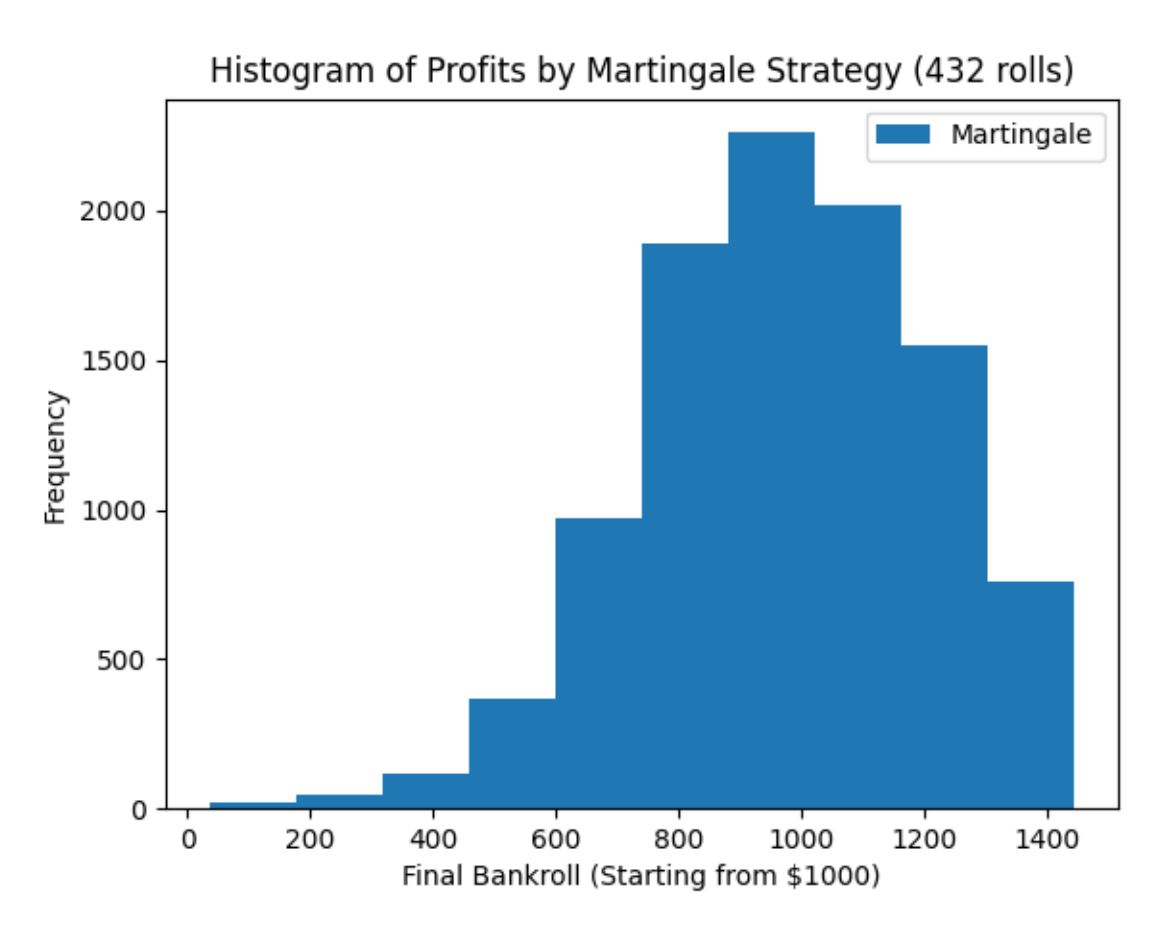
Common progression myth:
- Lose a spin at $1
- Double your next bet to $2
- If you win, you recover your loss plus profit
- Repeat
Why this fails in slots:
- Slots don't pay even money. A win might pay 0.5x your bet, or 2x, or 50x - it's random.
- You'll hit table limits or bankroll limits before recovering from a bad streak.
- Variance doesn't care about your betting pattern. Each spin is independent.
- You're just losing money faster with bigger bets.
Changing your bet size doesn't change the RTP. It doesn't change the odds. It doesn't influence the RNG. You're just risking more per spin, which means you bust faster when variance goes against you.
Strategies that Change Variance
Strategies that DO affect your experience:
- Playing high vs low volatility slots - Changes how wins are distributed (frequent small vs rare big)
- Bet size relative to bankroll - Determines how many spins you get and how long you last
- Choosing high RTP games - Reduces long-term house edge by a few percentage points
- Cashing out after big wins - Locks in profit before variance pulls you back
- Setting loss/win limits - Controls when you stop, which affects session outcomes
Strategies that DON'T change anything:
- Timing your spins - RNG is continuous, timing doesn't matter
- Switching games after losses - Each game is independent, switching changes nothing
- Betting patterns or progression systems - RNG doesn't care about your bet history
- Playing at specific times of day - Online slots don't have payout cycles
- "Priming" a slot with small bets before big bets - Doesn't change odds
The Real Strategy
The only strategy that actually works:
- Play slots you enjoy
- Bet small enough to get meaningful session length
- Choose higher RTP when possible
- Stop when you hit your loss limit
- Cash out if you get lucky and hit big early
This doesn't make you profitable. It makes you lose less and enjoy it more. That's the best you can do against a house edge.
Anyone selling you a "system" to beat slots is either lying or doesn't understand math. Strategies help you manage losses and entertainment value. They don't override the RNG, change the RTP, or make long-term profit possible.
If you're playing slots expecting a strategy to make you a winner, you're going to be disappointed and broke.
Can You Beat, Hack, or Cheat in Online Slots?
No. You cannot beat, hack, or cheat online slots from licensed providers. Not with software, not with scripts, not with timing, not with patterns. If someone tells you otherwise, they're either trying to scam you or they don't understand how online slots work.
RNG Manipulation Isn't Possible for Players
The RNG runs on the game provider's servers, not on your device. When you play a slot, your browser or app is just displaying what the server tells it to show. You're seeing a visual representation of outcomes that were determined server-side.
You have no access to:
- The RNG code
- The server running the game
- The algorithm determining outcomes
- Any variables that influence results
Even if you somehow intercepted the data between the server and your device, it's encrypted and would be useless. And even if you broke the encryption, the outcome is already decided before you see it. There's nothing to manipulate on your end.
The only people who could theoretically manipulate the RNG are the game providers themselves, and they're audited by third-party testing labs specifically to prevent this. If they got caught rigging games, they'd lose their licenses and their entire business would collapse.
Common Myths
Timing your spins: The RNG generates outcomes thousands of times per second whether you're playing or not. Clicking at a specific moment doesn't influence what you get. The outcome is determined by when you click, but that timing is random on your end. You can't "time" randomness.
Hot and cold slots: Slots don't have temperature. They don't get "due" for a payout. A slot that just paid out a big win has the exact same odds on the next spin as one that hasn't paid in hours. The RNG has no memory. Previous results don't influence future spins.
Patterns in symbols: People look at near-misses or specific symbol patterns and think they mean something. They don't. The symbols you see are just visual representations of RNG outcomes. A near-miss (like two jackpot symbols with the third just above the payline) is not "almost winning." It's losing. The RNG didn't "almost" give you a win - it gave you a loss, and the visual just happened to look close.
Switching games after losses: The RNG doesn't care that you lost 20 spins in a row. Switching to a different slot doesn't reset your "luck." Each game has independent RNG. Your results on one game don't influence another.
Max bet increasing win chances: Some older land-based progressives required max bet to qualify for jackpots. Most modern online slots don't work this way. Betting more doesn't change your odds of hitting features or winning. It just means you lose faster if variance goes against you.
Why "Slot Hacks" Exist Online
If you search "how to hack online slots" or "slot machine cheats," you'll find tons of content. YouTube videos, blog posts, PDFs, software downloads. None of it works. Here's why it exists:
Affiliate marketing: Many "hack" videos are just thinly disguised casino promotions. The creator makes a video claiming they have a secret method, then links to a casino with their affiliate code. They make money when you sign up and deposit. The "hack" is usually just "play this game at this casino" with no actual strategy.
Selling worthless software: Some scammers sell software or scripts that claim to predict outcomes or manipulate RNG. They charge $50-$200 for garbage that does nothing. The software might display random predictions or tell you when to bet, but it has zero connection to the actual game RNG.
Ad revenue and engagement: Creators post outrageous claims to get views and clicks. The content is designed to rank for "slot hacks" searches and generate ad revenue. They don't care if the method works - they care about views.
Phishing and malware: Some "slot hack" downloads are actually malware designed to steal your casino login credentials, payment info, or install keyloggers on your device. You're not downloading a hack - you're downloading malware.
Risks of Third-Party Software or Scripts
If you download and try to use third-party "slot hack" software, here's what actually happens:
Best case scenario: It does nothing. You wasted your time and maybe your money if you paid for it.
Likely scenario: You install malware. Your device gets compromised. Your personal information, casino login, or payment details get stolen.
Worst case scenario: The casino detects you're using third-party software and bans your account. Any balance you have gets forfeited. You lose access permanently. Most casino terms of service explicitly prohibit third-party software, bots, or automation.
Even if the software was somehow real (it's not), using it would violate the casino's terms and get you banned.
What About Exploits or Bugs?
Very rarely, a slot will have a bug that creates an exploit. This has happened a few times in online gambling history. Someone discovers the bug, exploits it, wins a lot of money, and then:
- The casino refuses to pay, citing malfunction voids all pays
- The player gets banned
- The game gets pulled and patched
- Sometimes legal action gets involved
Even if you found a real exploit, using it is grounds for account closure and forfeiture of winnings. Casinos don't have to pay out if they can prove the win came from a malfunction.
The only way to "beat" online slots is to not play them, or to play them for entertainment with money you can afford to lose and cash out when you get lucky.
There is no software, no system, no timing trick, no pattern recognition that changes the math. The RNG is random. The house edge is built in. You're going to lose long-term no matter what you do.
Anyone claiming otherwise is either trying to scam you or is delusional. Save your money, don't download random software, and don't fall for YouTube videos promising guaranteed wins.
If beating slots was possible, casinos wouldn't exist. They make billions because the math is on their side, not yours.
Bonus Features, Free Spins and Jackpots
How Bonuses Trigger
Bonus features trigger randomly based on the RNG, just like regular wins. Most slots require you to land a specific number of scatter symbols (usually 3, 4, or 5) anywhere on the reels to activate free spins or bonus games.
When you spin, the RNG determines:
- Whether scatters appear
- How many scatters appear
- Where they land
There's no pattern. There's no buildup. The game doesn't "get closer" to giving you a bonus. Each spin has the same independent chance of triggering the feature.
Some slots have weighted probabilities - meaning landing 3 scatters might be 1 in 200 spins, while landing 4 scatters might be 1 in 2,000 spins. You have no way of knowing these odds unless the provider publishes them, which most don't.
The bonus triggers when it triggers. You can't force it, predict it, or make it happen faster by betting more or playing longer.
Why Bonus Buys Don't Change RTP
Many modern slots have a "bonus buy" feature (also called "feature buy" or "buy free spins"). Instead of waiting for scatters to land naturally, you pay a fixed price (usually 50x to 100x your bet) to trigger the bonus immediately.
Example: On a $1 bet, the bonus buy might cost $100. You pay $100, and the game instantly starts the free spins round.
Here's the important part: The RTP stays the same whether you trigger bonuses naturally or buy them.
If a slot has 96% RTP in normal play, the bonus buy also has 96% RTP (sometimes it's listed separately in the paytable, like 96.05%). You're not getting better odds. You're just paying to skip the base game and access the high-variance part of the slot immediately.
Why people use bonus buys:
- They want action fast
- They don't enjoy base game grinding
- They have a smaller session window and want immediate excitement
Why bonus buys are risky:
- You're paying 50x-100x your bet upfront
- The bonus might pay 20x and you lose 80x instantly
- Variance is extreme - you can burn through your bankroll in minutes
- You need a large bankroll to survive multiple bonus buys
Bonus buys are fine if you understand you're paying for entertainment and high variance. But they're not a shortcut to winning. You're just compressing the variance into less time.
Progressive Jackpots
Progressive jackpots pool a small percentage of every bet made on that slot (or network of slots) into a growing prize pool. The jackpot increases until someone hits it, then it resets to a base amount and starts building again.
Types of progressives:
Standalone. One machine, one jackpot. Rare online.
Local. Jackpot shared across one casino's network. Medium prize pools.
Wide-area/Network. Jackpot shared across multiple casinos running the same game. Massive prize pools (Mega Moolah, Megaways jackpots, etc.).
How they work:
- A small percentage of each bet (usually 1-5%) goes into the jackpot pool
- The rest contributes to the base game RTP
- This means progressive slots often have lower base RTP (92-94%) than non-progressive slots
- The jackpot triggers randomly, often on any spin regardless of bet size (though some require max bet)
Why the odds are brutal:
Let's use Mega Moolah as an example. The Mega jackpot averages around $5-10 million when it hits.
- Millions of players worldwide are playing this slot
- The jackpot hits maybe once every few months
- Your personal odds of hitting it on any given spin are astronomically low (estimated at 1 in 50 million or worse)
You're more likely to get struck by lightning than hit a major progressive jackpot.
The math:
- You contribute cents to the jackpot with each spin
- The casino contributes cents from other players
- One player eventually wins millions
- Everyone else funded it
Progressive jackpots are a lottery within a slot. The odds are terrible, but someone has to win eventually.
Free Spins vs Paid Spins
Free spins are spins that don't deduct from your balance. You get them when you trigger a bonus feature. They use the RNG the same way paid spins do - same odds, same outcomes, just free.
Common misconception: "Free spins pay better than regular spins."
Not true. Free spins often come with modifiers (multipliers, expanding wilds, sticky symbols) that increase win potential, but the RNG is still random. You can get 10 free spins and win nothing. You can get 10 free spins and win 500x your bet. Both are normal.
Why free spins feel more rewarding:
- They often have enhanced features (multipliers, extra wilds)
- You're not spending money while they run
- Psychologically, any win feels "free"
But mathematically, free spins are just part of the slot's overall RTP. The base game is designed to be lower-paying to compensate for the higher-paying potential of bonuses.
When a casino gives you "50 free spins" as a promotion, those are also just regular spins with normal RTP. They're free to you, but the outcomes are still determined by RNG. Wagering requirements usually apply, meaning you have to bet your winnings many times over before you can withdraw.
Why Chasing Jackpots Is Entertainment, Not Strategy
If you play progressive jackpot slots expecting to hit the jackpot, you're setting yourself up for disappointment.
Realistic expectations:
- You will almost certainly never hit the big jackpot
- You're playing a slot with lower base RTP to fund the jackpot pool
- Your session-to-session results will be worse than non-progressive slots
- The jackpot is a lottery ticket, not a realistic goal
Why people play them anyway:
- The dream of life-changing money
- The excitement of seeing the jackpot meter
- The "what if" factor
That's fine. Just understand what you're doing. You're buying entertainment and a slim lottery chance, not executing a strategy.
Better approach: Play progressive slots occasionally for fun, with money you're fine losing. Don't make them your main game if you care about session RTP or getting decent gameplay time for your money.
Examples and Math Comparisons
Example 1: Bonus buy
- Slot: Wanted Dead or a Wild (Hacksaw Gaming)
- Base RTP: 96.38%
- Bonus buy cost: 80x bet
- You're betting $1 per spin, so bonus buy costs $80
You trigger the bonus buy. The feature gives you free spins with multipliers and potential for big wins. Possible outcomes:
- Bonus pays 20x ($20) - you're down $60
- Bonus pays 100x ($100) - you're up $20
- Bonus pays 500x ($500) - you're up $420
Over many bonus buys, the average return is still 96.38%. You're not beating the house edge. You're just experiencing extreme variance in compressed time.
Example 2: Progressive jackpot
- Slot: Mega Moolah
- Base RTP: ~92%
- Mega Jackpot: $8,000,000
- Your odds of hitting it: approximately 1 in 50,000,000
You play 500 spins at $1 per spin. You spend $500. Your expected return from base RTP is $460 (you lose $40 on average). Your chance of hitting the jackpot across those 500 spins is still microscopic.
The chance of winning depends linearly on betting size. So unless you’re autoplaying on the highest possible bet sizes and skipping animation (which would burn through hundreds of dollars per minute) chances of you ever hitting it are negligible.
Bonus features, free spins, and jackpots make slots more entertaining. They add variance and create moments of excitement. But they don't change the fundamental math. You're still playing against a house edge, and you're still going to lose long-term.
If you enjoy the thrill of chasing bonuses or dreaming about jackpots, that's fine. Just don't confuse entertainment with strategy. You're not investing - you're gambling for fun.
Online slots are entertainment with a built-in cost. The math guarantees the house wins long-term, and no strategy, system, or secret method changes that. If you play slots, do it because you enjoy the variance and can afford to lose the money, not because you expect to come out ahead. Understand the RNG, pick games with decent RTP, manage your bankroll so you actually get to play, and cash out when you get lucky. Some sessions you'll win. Most sessions you'll lose. That's the deal. If you go in with realistic expectations and treat it like paying for entertainment rather than chasing profit, you'll have a better time and fewer regrets.
Have fun and good luck!