
Actual no-KYC casinos are rare as hell though, especially for US players. Our list aggregates those who verify only what's miminaly required by respective licensing agences - no stalling.
The real benefit of no KYC isn't privacy, it's that your money isn't sitting in limbo for 3 weeks while someone in Malta decides whether your driver's license photo is clear enough. If you actually find a casino that doesn't ask for documents, withdrawals are just faster. Less friction, less risk of having your funds frozen. That's it.
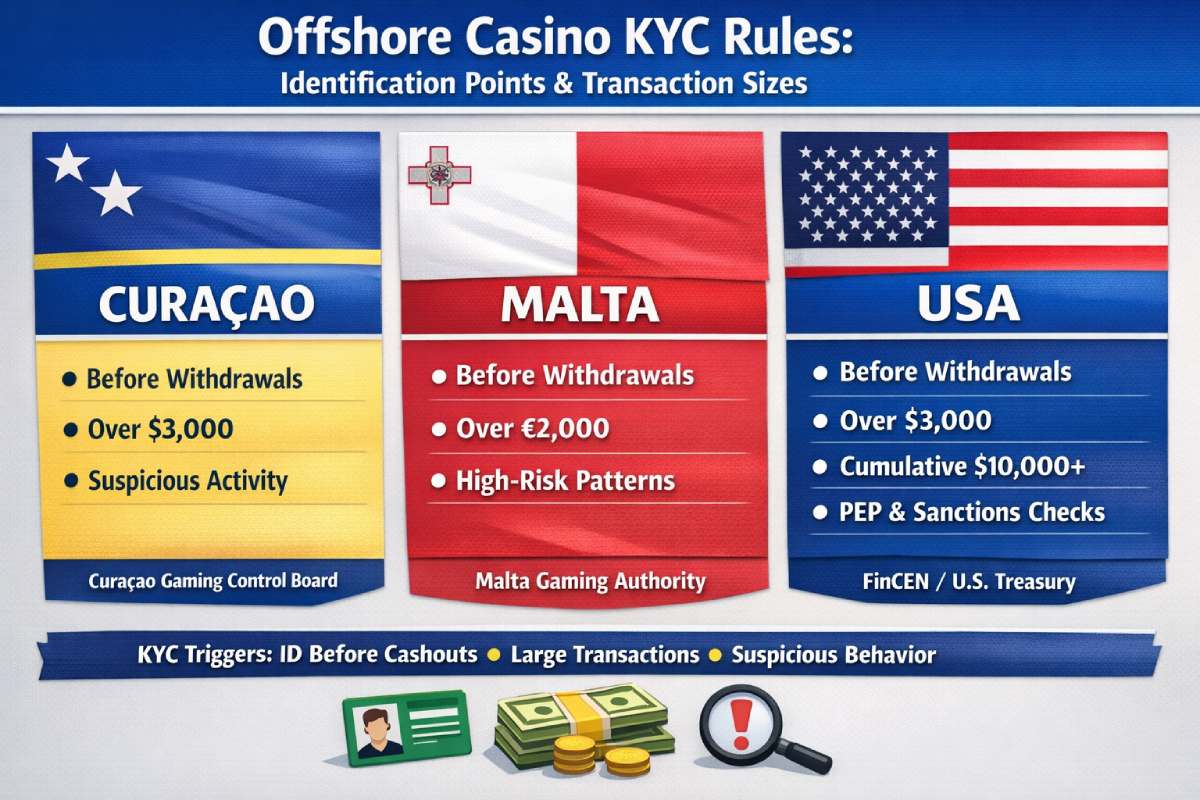
KYC causes frozen withdrawals for US players
US players get screwed by KYC more than anyone else. The typical pattern:
You deposit, you play, you win. Then you try to withdraw and suddenly the casino needs to "verify your account." You send your ID. But your state isn't on their license. Or your bank statement shows transactions they don't like. Or the name on your crypto wallet doesn't match perfectly.
Your withdrawal gets frozen. Support goes silent. You're stuck in email hell for weeks, sometimes months. Your winnings are just sitting there, locked up.
This happens way more to US players because most offshore casinos operate in a gray area for US customers. They get nervous about US banking laws and payment processors. When something looks off, they freeze first and ask questions later. US documents sometimes trigger extra scrutiny from their compliance teams.
Banks vs gambling vs crypto reality
Traditional online casinos have to deal with banks, and banks hate gambling transactions - especially from US customers to offshore casinos. This creates problems:
- Credit card deposits get declined or flagged as fraud
- Wire transfers get rejected by intermediary banks
- E-wallets ban gambling accounts randomly
- When you withdraw, the casino might have to send fiat through 3 different processors
Every single one of those steps is a chance for your withdrawal to get frozen pending verification.
Crypto cuts through all that. When a casino pays you in Bitcoin or USDT, there's no bank in the middle saying "wait, we need to verify this." The transaction either goes through or it doesn't. No frozen funds, no pending status for 5 business days while Visa decides if they like your casino.
Privacy + speed beats bonuses
Most no-KYC casino marketing screams about huge bonuses and free spins. Ignore that noise.
The real players who use these casinos don't care about a 200% bonus with 50x wagering. They care about getting their money out fast when they win. That's it. That's the whole appeal.
What's better:
- A $500 bonus that you'll probably never clear, plus a 2-week withdrawal process with document requests
- No bonus, but your $2,000 win hits your wallet in 15 minutes
For anyone who's had a withdrawal frozen before, this isn't even a question. Speed and certainty beat casino funny money every time.
Most "no KYC" casinos will eventually ask you for documents.
The marketing says "fully anonymous" and "instant withdrawals, no verification." What actually happens:
- First few withdrawals go through fine (usually under $1,000-$2,000)
- Then you hit a threshold - either amount or frequency
- Suddenly they need verification "for your security"
- Now you're doing KYC anyway, just later in the process
True no-KYC means you can withdraw $10,000 without ever sending a single document. That's extremely rare. Most casinos are really "delayed KYC" or "limited no-KYC" - they just don't advertise it that way.
In fact, $10,000 is when each casino shall file a report of each transaction.
When you see "no KYC casino," read it as "probably won't ask for documents on small withdrawals." That's still better than mandatory KYC up front, but it's not the Wild West freedom the marketing suggests.
The benefit is real - faster withdrawals, less hassle for regular players. Just keep your expectations realistic about what "no KYC" actually means.
What "No KYC" Really Means in Practice
"No KYC" is a spectrum, not a binary yes/no situation. Understanding where a casino falls on that spectrum matters if you don't want surprises when you try to withdraw.
No KYC at signup vs no KYC at withdrawal
Almost every crypto casino is no-KYC at signup. You give them an email (sometimes not even that), create a username, and you're in. That part is easy and basically universal.
The question is what happens when you want your money back.
Some casinos never ask for documents unless you hit specific triggers - high withdrawal amounts, suspicious patterns, or they just randomly decide to check. Others will ask everyone eventually, they just wait until you're trying to cash out. A few actually never ask, but those are uncommon and usually have other tradeoffs (sketchy reputation, limited game selection, etc.).
The signup experience tells you nothing about withdrawal requirements. A casino can let you deposit $10,000 with zero verification, then lock your account when you try to withdraw $500. It happens.
Common withdrawal limits before verification
Most casinos that claim "no KYC" will let you withdraw without documents up to a certain threshold. Common limits you'll see:
Daily/weekly limits:
- $1,000 - $2,000 per day (smaller casinos)
- $5,000 - $10,000 per day (mid-tier casinos)
- $10,000+ per day (rare, usually newer casinos trying to attract whales)
Lifetime limits before KYC:
- Some casinos total up everything you've withdrawn. Once you hit $5,000 or $10,000 total, they want documents
- Others don't care about total amount, just individual withdrawal size
- A few track your net position (deposits vs withdrawals) and only verify if you're up significantly
These limits aren't always published. You find out when you hit them. Some casinos will tell you up front "withdrawals under $2,000 require no verification," but most just handle it case-by-case.
No KYC doesn't mean "never verified"
Even casinos that genuinely start as no-KYC can change their mind about you specifically. Reasons they might suddenly ask for documents:
You're winning too much. If you turn $200 into $15,000, they might want to verify you're not exploiting something or using multiple accounts.
Weird withdrawal patterns. Depositing $100, withdrawing $99, over and over. Or depositing from one wallet and withdrawing to a completely different one. Stuff that looks like money laundering.
Their payment processor demands it. Even if the casino doesn't care, sometimes their crypto payment gateway flags transactions and won't process without verification.
Regulatory pressure. Their license jurisdiction might require retroactive KYC. Or they're applying for a new license and need to clean up their user base.
You triggered their internal limits. Each casino has its own rules. Maybe it's $10,000 total withdrawn. Maybe it's 5 withdrawals in one day. Maybe it's winning on a specific game they're monitoring for abuse.
The point: "no KYC" means "no KYC until we decide otherwise." You don't control when that decision happens.
When casinos are legally forced to request documents
Some situations aren't optional - the casino has to ask for KYC or face serious legal problems:
AML (Anti-Money Laundering) requirements. If transactions look like money laundering, licensed casinos must verify. This includes large transactions, rapid deposit/withdrawal cycles, or patterns that match known laundering techniques.
License compliance. Curacao licenses (most common for crypto casinos) technically require KYC, but enforcement is loose. Malta, UK, Swedish licenses - those require strict KYC, no exceptions. If a casino operates under one of these, they're legally obligated to verify eventually.
Payment processor demands. Third-party processors handling crypto transactions often have their own compliance rules. The casino might not care, but Coinbase Commerce or BitPay might refuse to process without verification.
Government requests. If law enforcement from any jurisdiction requests information about a player, the casino has to either provide it or verify identity. This is rare but happens.
Disputes and chargebacks. If you dispute a transaction or claim fraud, they'll definitely require full verification to resolve it.
The casinos operating with the loosest KYC requirements usually have weak licensing (Curacao or no license at all), use direct wallet payments instead of third-party processors, and operate in jurisdictions where enforcement is minimal. That freedom comes with risk - if they decide not to pay you, you have basically zero recourse.
Can You Withdraw Crypto Without KYC?
Short answer: yes, but with conditions
You can absolutely withdraw crypto without KYC. People do it every day. But "can you" and "will the casino let you" are different questions.
The conditions that matter:
- Withdrawal amount stays under the casino's threshold (usually $1,000-$2,000 per transaction)
- You're not doing anything that looks suspicious
- The casino hasn't randomly decided to verify everyone
- You haven't hit their cumulative withdrawal limit
If those conditions are met, yeah, you'll probably get paid without sending documents. If any of them break, expect to verify.
Crypto enables no-KYC withdrawals
Crypto withdrawals work differently than fiat on a technical level, which is why casinos can skip verification:
No intermediaries. When you withdraw Bitcoin, the casino sends it directly from their wallet to yours. There's no bank asking questions, no payment processor reviewing the transaction, no regulatory body that needs to be satisfied. The blockchain doesn't care who you are.
Irreversible transactions. Once crypto is sent, it's gone. The casino can't reverse it, you can't chargeback, there's no dispute process. This removes a major reason casinos verify identity - they're not worried about you claiming fraud later.
Pseudonymous by design. Crypto wallets don't have names attached. The casino sends funds to "bc1q..." not to "John Smith, 123 Main Street." From a technical standpoint, they don't need your identity to complete the transaction.
Lower regulatory scrutiny. Crypto-to-crypto transactions fall into regulatory gray areas in many jurisdictions. If a casino only handles crypto (never touching fiat), they face fewer AML requirements in some places. Not zero requirements, but fewer.
This is why you'll almost never find a true no-KYC casino that offers fiat withdrawals. The moment banks get involved, identity verification becomes mandatory.
Coins most commonly used (BTC, USDT, ETH, SOL)
Not all cryptocurrencies are treated equally at no-KYC casinos. What you'll actually see:
Bitcoin (BTC) - Universal. Every crypto casino accepts it. Withdrawals work, but fees can be $5-$20 depending on network congestion. Slower confirmation times (10-60 minutes usually).
USDT (Tether) - Increasingly common, especially on Ethereum or Tron networks. Stable value makes it easier to calculate winnings. Lower fees than Bitcoin on Tron. Some casinos prefer it because players don't complain about price volatility eating their winnings.
Ethereum (ETH) - Widely accepted but gas fees can be brutal ($10-$50 for a transaction during busy periods). Faster than Bitcoin when the network isn't congested.
Solana (SOL) - Growing in popularity. Super fast, cheap fees (under $0.01 usually). Not as universally accepted yet, but newer casinos are adding it.
Others (LTC, DOGE, BCH, TRX) - Some casinos accept these. Litecoin and Bitcoin Cash offer faster/cheaper alternatives to Bitcoin. Dogecoin is mostly a meme but works fine. Tron is popular for USDT transfers.
Most players stick with BTC or USDT. Bitcoin because it's everywhere, USDT because you don't have to worry about the price dropping 5% while your withdrawal processes.
Withdrawal size, behavior, and red flags that trigger KYC
Casinos watch for patterns that indicate problems. These commonly trigger verification requests:
Size-related triggers:
- Single withdrawal over $2,000-$5,000 (varies by casino)
- Multiple withdrawals totaling over $10,000 in a short period
- Withdrawing an amount much larger than your typical play (depositing $100 for weeks, then suddenly withdrawing $8,000)
Behavioral red flags:
- Depositing and immediately withdrawing without playing much (looks like money laundering)
- Using different wallet addresses for every deposit/withdrawal
- Depositing from an exchange wallet, withdrawing to a different exchange
- Withdrawing to a wallet that's been flagged in their system (maybe it's associated with other accounts)
- Winning on games they're monitoring for exploits or bugs
Timing patterns:
- Too many withdrawals in one day (even if each is small)
- Withdrawing immediately after every winning session
- Depositing from multiple wallets in quick succession
Account anomalies:
- Using a VPN that changes locations frequently
- Playing from different countries in a short timeframe
- Account created recently but immediately making large transactions
- Email domain looks suspicious (temporary email services, etc.)
None of these guarantee you'll be asked to verify. But they increase the odds significantly. The players who withdraw crypto without KYC for months are usually the ones who:
- Keep individual withdrawals reasonable ($500-$1,500)
- Withdraw to the same wallet consistently
- Don't do weird deposit/withdrawal gymnastics
- Actually play instead of just moving money around
- Stay under whatever magic threshold the casino has set
You can't know the exact rules because casinos don't publish them. But staying boring and predictable is your best bet for avoiding verification requests.
No Deposit Bonus
If you don't require KYC, anyone can create 50 accounts in 10 minutes. Each account claims the no deposit bonus. They play through the wagering, cash out whatever they can, and the casino just hemorrhages money to the same person over and over.
Even with KYC, casinos lose money on no deposit bonuses. They're marketing expenses. But at least with verification, they can limit it to one bonus per person. Without KYC, there's no way to prevent abuse.
The "no deposit bonuses" you'll find at no-KYC casinos are usually:
- Fake (bonus exists but terms make it impossible to withdraw)
- Extremely limited ($5-$10 maximum, basically worthless)
- Restricted to specific games where the house edge is massive
- Available but require KYC to withdraw anything
- Technically real but not actually "no deposit" (you need to deposit first to withdraw bonus winnings)
True no-strings no deposit bonuses at genuine no-KYC casinos? Practically nonexistent. If you find one, it's either a brand new casino burning money to acquire users, or there's a catch you haven't found yet.
Max cashout limits and wagering traps
The few no deposit bonuses that exist come with restrictions that make them barely worth the effort:
Max cashout limits:
- Typical limit: $50-$100 maximum withdrawal from no deposit bonus
- Some go as low as $25
- You could turn the bonus into $5,000 and still only withdraw $50
Wagering requirements:
- Usually 40x-60x the bonus amount minimum
- Get a $10 bonus? You need to wager $400-$600 before withdrawing
- Higher wagering requirements than deposit bonuses (since the casino wants to make back the free money)
Game restrictions:
- Often limited to slots, sometimes specific slots
- Table games either excluded or contribute 10% toward wagering
- Max bet limits while clearing wagering (usually $5 per spin)
Time limits:
- Bonus expires in 24-48 hours usually
- Wagering must be completed within that window
- Miss the deadline and everything vanishes
The real trap: Even after you complete 50x wagering on a $10 bonus and build it to $200, the casino can still ask for KYC when you try to withdraw your $50-$100 max cashout. "No KYC casino" doesn't mean they can't verify you when they want to. And free bonus money gives them extra incentive to verify, since bonus abuse is common.
When no-deposit bonuses are still worth trying
Despite all the negatives, there are situations where claiming a no deposit bonus makes sense:
Testing a new casino. If you want to see how a casino's games run, check their withdrawal process, and test customer support, a no deposit bonus lets you do that without risking your own money. Even if you never withdraw, you learned whether the casino is worth using.
You have time to burn. If you're bored and want to gamble with zero risk, why not? Worst case you waste an hour. Best case you clear the wagering and actually withdraw $50-$100. It's free entertainment either way.
The terms are unusually good. Occasionally you'll find a no deposit bonus with reasonable terms - 20x wagering, $100 max cashout, wide game selection. These are rare but worth grabbing if you spot one.
You're genuinely curious about the games. Some casinos offer exclusive games you can't play elsewhere. A no deposit bonus gives you access to try them without depositing.
Just don't expect to make money. Treat it as a free trial, not a profit opportunity.
Some players ignore bonuses
Players who gamble regularly with real money don't bother with no deposit bonuses because:
Time isn't worth the return. Spending 2-3 hours clearing wagering requirements to maybe withdraw $50 is a terrible hourly rate. If you're going to gamble anyway, just deposit and play without restrictions.
The games you want are usually excluded. Serious players have preferences - specific slots, live dealer games, sports betting. No deposit bonuses rarely let you play those. You're stuck with whatever games the casino wants to promote.
It attracts attention. Claiming bonuses, especially no deposit bonuses, puts you on the casino's radar as a "bonus hunter." If you later deposit real money and win, they're more likely to scrutinize your account. Some players prefer to stay under the radar.
Withdrawal restrictions interfere with real play. If you claim a no deposit bonus and later deposit your own money, the withdrawal restrictions often apply to your entire balance until you clear the bonus wagering. This can lock up your real money.
It's just not that much money. If you're playing with $500-$5,000 bankrolls, a $10 bonus with $50 max cashout is irrelevant. The mental energy to track wagering progress and game restrictions isn't worth it.
The people who chase no deposit bonuses are either newcomers testing casinos or bonus hunters running multi-account operations. Experienced players who plan to deposit anyway skip straight to deposit bonuses (which have better terms) or ignore bonuses entirely and just play.
If you're in the US looking for no-KYC casinos, you're probably doing so because you want fast, hassle-free withdrawals. No deposit bonuses are the opposite of that - slow, restrictive, and likely to trigger verification anyway. They contradict the whole point of using a no-KYC casino.
How to Use No KYC Crypto Casinos Safely in USA
Don't let winnings accumulate in your casino account. Withdraw regularly, even if it means paying transaction fees multiple times.
Here is a map with USA sataes that legalized online gambling in some form. If you're not in one of those states, your only options are offshore platforms.
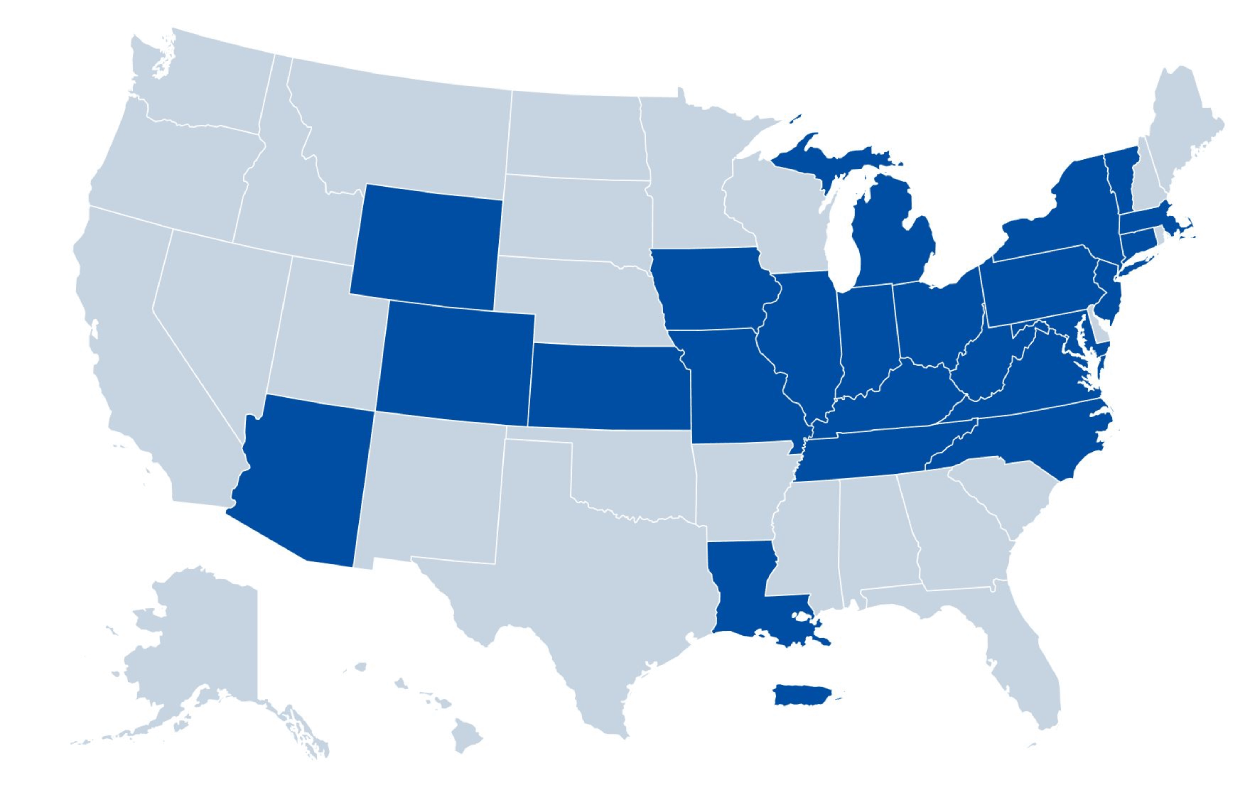
The reason is you have zero leverage once money is in their system. If the casino decides to ask for KYC, freeze your account, or just stop processing withdrawals, your money is stuck. You can't force them to pay you. You can't sue an unlicensed offshore casino. You just wait and hope.
Withdrawing frequently limits your exposure. If you turn $500 into $2,000, withdraw $1,500. Leave enough to keep playing, take the rest out. Win another $1,000? Withdraw again.
Yeah, you'll pay more in transaction fees. A $5-$10 Bitcoin fee every few days adds up. But it's insurance. Better to lose $50 in fees than have $5,000 locked up when the casino decides they need to verify you or just disappears.
Players who get burned are usually the ones who built their balance to $10,000+ before attempting their first withdrawal. By then, they've given the casino a reason to scrutinize everything.
Don't keep large balances
Related to the above, but worth emphasizing: treat casino accounts like hot wallets. Keep the minimum necessary, nothing more.
Casinos can:
- Get hacked (crypto casinos are prime targets)
- Exit scam (take everyone's money and shut down)
- Have internal fraud (rogue employees stealing from accounts)
- Freeze accounts arbitrarily
- Go bankrupt and stop processing withdrawals
If you have $200 in your account when any of these happen, you lose $200. If you have $8,000, you lose $8,000. Keep balances small.
Some players deposit once and keep a bankroll in the casino for convenience. Bad idea at no-KYC casinos. These operations don't have the insurance, auditing, or regulatory oversight that licensed casinos have. Your money isn't protected.
Deposit what you plan to play with in the next session. When you're done, withdraw everything except maybe $50-$100 for next time.
Avoid bonus abuse
Bonus abuse gets your account flagged faster than anything else. Even at casinos that don't care about KYC, they care about people exploiting bonuses.
What counts as bonus abuse:
- Creating multiple accounts to claim the same bonus repeatedly
- Only playing bonus-eligible games, cashing out immediately after clearing wagering
- Coordinating with other players to exploit bonus terms (opposite betting in live dealer games, etc.)
- Using software or bots to optimize bonus clearing
- Depositing only when bonuses are available, never playing without them
If the casino suspects bonus abuse, they'll ask for KYC even if they normally don't. And if you can't or won't verify, they'll just keep your money and ban your account. Their terms always include clauses about bonus abuse, and they're not shy about enforcing them.
You can use bonuses. Just don't make it obvious you're only there for the bonuses. Play normally, take bonuses when they make sense, and don't try to optimize every dollar out of promotional offers.
Use personal wallets, not exchanges
Never withdraw casino winnings directly to an exchange wallet (Coinbase, Binance, Kraken, etc.). Always withdraw to a personal wallet you control first.
Exchanges monitor where funds come from. If they detect gambling transactions, they can:
- Freeze your account
- Require source of funds documentation
- Ban you permanently
- In extreme cases, report you to authorities
Coinbase especially is aggressive about this. Players have had accounts frozen for receiving crypto directly from known casino wallets.
The safe process:
- Withdraw from casino to your personal wallet (Electrum, Exodus, hardware wallet, etc.)
- Wait for confirmations
- Send from personal wallet to exchange if you want to cash out to fiat
- If questioned, your personal wallet gives you plausible deniability about the source
Some players use a second intermediate wallet for extra distance. Casino → Wallet A → Wallet B → Exchange. Probably overkill for small amounts, but if you're moving serious money, the extra step provides more separation.
Using your personal wallet also protects you if the casino's wallet gets blacklisted. Some crypto analysis firms flag known gambling wallets. If you receive funds from a flagged address, exchanges might question it. Passing through your own wallet first makes the connection less obvious.
Reputation matters more than licensing
Most no-KYC crypto casinos have either weak licenses (Curacao) or no license at all. Some have licenses from jurisdictions you've never heard of. The license itself is mostly meaningless.
What actually matters: reputation and track record.
A casino can have a Curacao license and still scam you. The license doesn't guarantee they'll pay withdrawals. Curacao's enforcement is basically nonexistent. Complaints go nowhere. The license is just a piece of paper that lets them claim they're "regulated."
Conversely, some unlicensed casinos have operated for years, paid out millions, and never had major issues. Their reputation is their license. They know if they start scamming people, word spreads fast and their business dies.
What to check:
- How long has the casino operated? (Newer than 6 months is risky)
- What do players say on Reddit, forums, review sites? (Ignore obviously fake reviews)
- Do they have a presence on gambling communities? (Casinos that engage with players are less likely to scam)
- Have there been withdrawal complaints? (Every casino has some, but look for patterns)
- Do they respond to issues publicly? (Casinos that ghost players are red flags)
You're trusting them with your money based on their interest in maintaining their reputation. A casino that's been paying players for 2-3 years has incentive to keep doing so. They're making money, why kill their business?
A casino that launched last month with no reviews, anonymous operators, and a sketchy website? They might pay you. Or they might take your deposit and disappear tomorrow. The license they claim to have doesn't change that calculation.
This is uncomfortable for a lot of people. You're relying on trust instead of regulation. But that's the reality of no-KYC crypto casinos accessible to US players. The trade-off for avoiding verification and fast withdrawals is accepting more risk. Know what you're getting into.
No-KYC casinos make withdrawals faster and easier. You skip the document upload hassle, you avoid having funds frozen during verification, and you get paid quicker when you win.
But they don't make gambling safer. You're still trusting an offshore casino with your money. Actually, you're taking on more risk because you have less recourse if something goes wrong. No regulatory protection, limited ways to dispute issues, and the casino can still ask for verification whenever they want.
The value proposition is simple: trade regulatory protection for convenience. Worth it if you understand what you're giving up. Not worth it if you're expecting anonymity and security.